

Yes, wearing an inappropriate shirt in public is rude when its message targets other people, ignores the occasion, or puts explicit humor in front of an audience that did not choose it. A sarcastic shirt is not automatically disrespectful; the wording, setting, and audience determine the etiquette. Wear the joke where it fits, and change it when other people’s occasion deserves priority.
- Is it rude to wear inappropriate shirts in public? Yes, when the message disregards the audience or occasion.
- Unfilteredoutfitters graphic tees suit adults seeking irreverent humor, not every public setting.
- For adult humor shirts, check the literal message, audience, and dress code before leaving.
- Choose self-directed sarcasm over insults aimed at strangers; bring a plain layer when your plans change.
Why this matters
You choose your shirt, but you do not choose everyone who reads it. Friends understand your delivery and private jokes; a stranger gets only the words across your chest. That difference matters more than whether you consider yourself an offensive person.
For your 2026 wardrobe, separate personal taste from situational judgment. You can enjoy an irreverent design without treating every invitation as the right place to wear it. If you are sorting through stronger language, the guide to profanity t-shirts addresses that specific category; the question here is when the message belongs in public.
Is it rude to wear inappropriate shirts in public?
It is rude when the shirt makes someone else the unwilling target or disregards a clear expectation for the setting. It is not automatically rude simply because the humor is sarcastic, blunt, or different from another person’s taste.
Use this comparison as an etiquette guide, not a promise that every person will react alike. The recommendation concerns the message and occasion, not your right to enjoy a particular style.
| Shirt message | Best for | What works | Where it falls short | Recommendation |
|---|---|---|---|---|
| Self-directed sarcasm | Casual plans with friends who share the joke | Makes your own habits the subject | Still distracts at serious occasions | Choose for informal outings |
| General profanity | Adult gatherings where that language is welcome | Communicates a deliberately blunt tone | Adds avoidable friction around children or formal hosts | Keep to suitable adult settings |
| Sexual innuendo | Adult social plans with a receptive group | Offers humor built around a shared understanding | Does not belong at every mixed-age event | Check the audience first |
| Insults aimed at others | No recommended setting for targeting strangers | Makes the message unmistakable | Turns clothing into a personal put-down | Skip the targeted insult |
A useful distinction: someone disliking your shirt does not automatically make you rude. Choosing to humiliate that person with it is a different matter. Judge the conduct and context, not just the presence of a swear word.
Mild sarcasm: best for casual, familiar company
A joke about your own dislike of mornings, small talk, or crowded plans keeps the subject close to you. That makes it a better starting point than wording that labels everyone around you stupid or unwelcome. You still need to read the occasion.
The limitation is tone. A shirt about avoiding people communicates something different when you are meeting a friend for coffee than when you are welcoming guests or asking someone for help. If warmth is part of your role that day, choose wording that does not work against it.
For everyday outfits in 2026, start with this question: does the shirt describe your mood, or does it assign a negative role to everyone you meet? Favor the former when you want sarcasm without picking a fight.
Profanity and innuendo: best for receptive adult company
Explicit wording requires a more deliberate choice. An adult gathering where the group enjoys that humor gives the joke context; a school event or family ceremony does not offer the same shared understanding. Treat those as different occasions, even if they happen on the same day.
Wordplay also deserves a literal reading. Swapped letters and abbreviations do not remove the underlying meaning when the intended phrase is recognizable. Judge the joke you expect people to understand, not just the letters actually printed.
The benefit is expressive freedom within a receptive group. The drawback is limited usefulness outside that group. Save the stronger shirt for the part of your day where the humor is welcome.
Targeted insults: skip making strangers the punchline
A shirt that mocks a stranger’s identity, appearance, or vulnerability asks that person to absorb the joke without agreeing to participate. That is different from making fun of your own coffee habit. Do not treat those messages as interchangeable forms of harmless attitude.
Look beyond what you meant when buying it. If the literal wording singles out a group for contempt, explaining that you are friendly does not change what the shirt says.
You do not need to give up dark humor to avoid targeting people. Choose a joke about yourself, a shared frustration, or an absurd situation instead. That preserves the tone without requiring someone else to be the casualty.
Why judgments about inappropriate shirts vary
The same words do not belong in every room. Use these factors to make a specific decision rather than labeling the whole shirt acceptable or unacceptable forever.
- Audience: Distinguish a receptive adult group from a mixed-age gathering. Do not assume everyone accompanying your friends shares their taste.
- Occasion: Give weddings, memorials, ceremonies, and other host-centered events priority over your desire to display a joke.
- Your role: A guest, employee, parent volunteer, and party organizer have different responsibilities. Choose clothing that supports what you are there to do.
- Literal wording: Read the complete message, including implied profanity and recognizable innuendo. Intent does not substitute for the actual text.
- Dress expectations: Check the invitation or the venue’s stated requirements rather than relying on what another guest once wore.
- Ability to disengage: Use greater restraint when people must remain beside you, participate with you, or depend on your assistance.
For a 2026 event invitation, resolve uncertainty with the host before the event. A direct question about attire is more useful than a debate at the entrance.
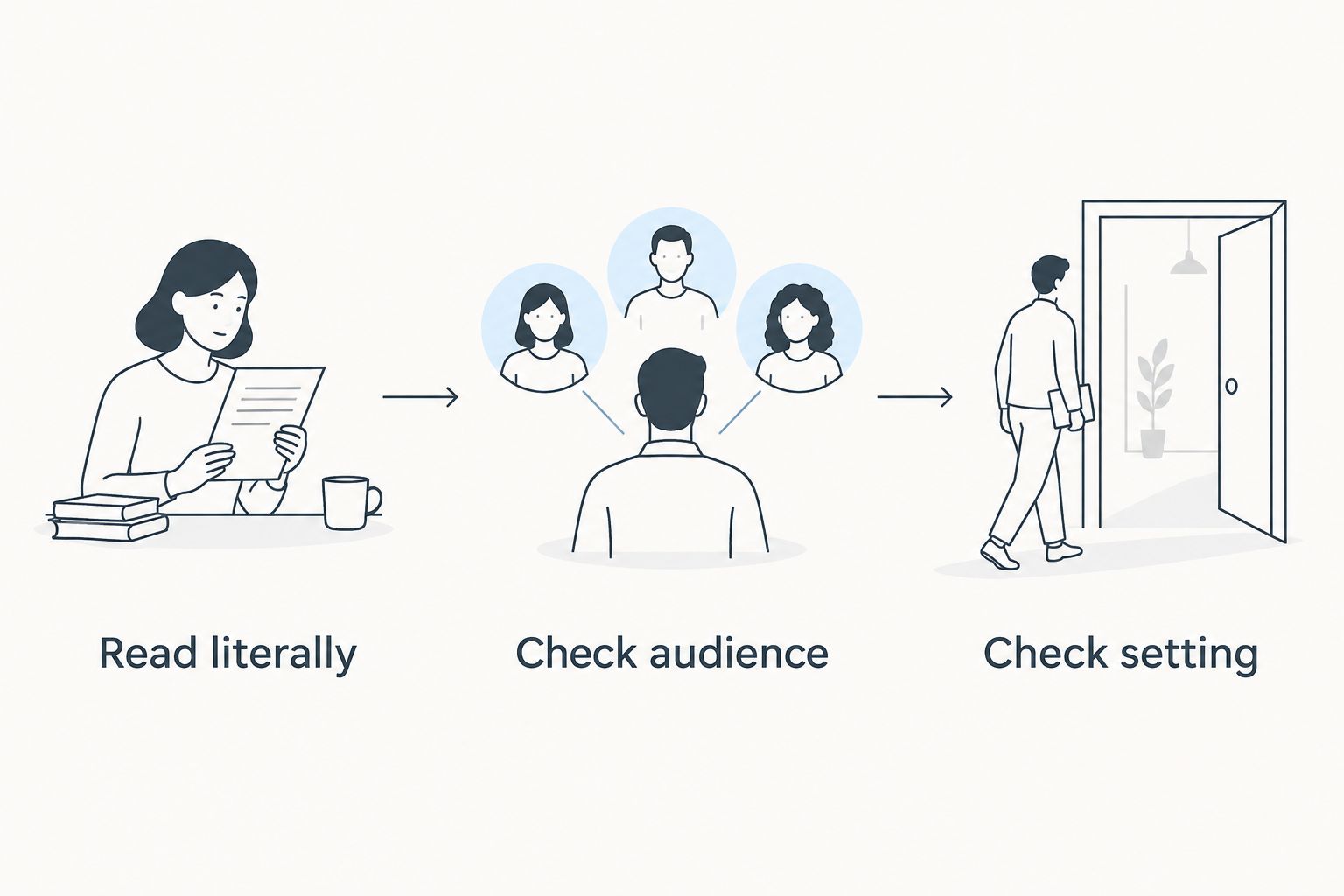
Use this 3-question check before leaving
You do not need a complicated rulebook. Ask these questions in order, then choose the outfit that works for your whole plan.
- Read literally. What does the shirt say without your explanation? Include the implied meaning of abbreviations, wordplay, and images. If the explanation depends on knowing your personality, strangers do not have that context.
- Check audience. Who will actually be there? Consider children, hosts, coworkers, and people outside your immediate group. An adult friend enjoying the joke does not answer the question for everyone else.
- Check setting. What are you there to do, and what clothing does that require? Look at the invitation and stated dress expectations. If the shirt competes with the purpose of the event, change it.
Keep the decision simple: a clear mismatch is enough reason to choose another top. You do not have to prove that every person would be offended before making a considerate choice.
Choosing attitude without choosing the strongest wording
Unfilteredoutfitters graphic tees are best for adults who want bold, irreverent humor. That is a style fit, not a claim that every design suits every destination. The brand sells humor-driven apparel; you still make the etiquette decision.
Two supplied designs show why wording matters. Neither recommendation implies universal approval, and neither replaces checking an event’s dress expectations.
| Design | Best for | Reason to choose it | Reason to pass |
|---|---|---|---|
| Ew, People T-shirt | Casual plans where friends understand your antisocial joke | States a blunt, general reaction without explicit wording in the title | The dismissive message works against a welcoming role |
| Fet's Luck T-shirt | Adult company that enjoys suggestive wordplay | Makes the joke through intentionally rearranged wording | The implied meaning still needs an adult-context check |
Choose the first when general sarcasm is the point; choose the second only when the implied joke fits the company. Pass on either for an occasion where you want your clothing to stay out of the conversation.


Can I wear an inappropriate shirt around children?
Choose non-explicit wording for child-centered settings. A playground visit, school activity, or children’s celebration is not the place to make adults explain your sexual joke or profanity.
A mixed-age public space is not identical to a child-centered event, but the audience still belongs in your decision. If children are central to your plans, select the shirt for that reality rather than hoping nobody reads it.
Is it rude to wear a sarcastic shirt to work?
Wear a sarcastic shirt to work only when it fits the dress expectations and your responsibilities. Start with the actual workplace requirements, not whether the slogan makes your coworkers laugh.
For work events in 2026, also consider customers, guests, and people outside your team. A joke about not caring deserves extra scrutiny when your role requires attentiveness or service. Personal amusement is not the only purpose your outfit serves.
Should I change if someone says my shirt is offensive?
Change or cover the shirt when the objection identifies a real mismatch with the occasion. Listen for specifics: explicit wording at a children’s event, an insult directed at a guest, or a conflict with the host’s dress request.
A stranger expressing a different taste is not the same situation. You can acknowledge the comment and disengage without demanding approval or turning the exchange into a public argument.
What to do when your plans change
Plan for the strictest stop on your itinerary. If your day includes both an adult party and a family gathering, pack 2 outfits rather than expecting one provocative shirt to suit both. That is a practical recommendation, not a requirement to dress cautiously everywhere.
Alternatively, bring 1 plain layer that fully covers the message. Check it while standing and sitting; an open jacket does not cover a slogan. If covering it creates an outfit that does not fit the occasion either, change the shirt instead.
For your 2026 outings, make the adjustment before arriving. You keep the humor for the right setting and avoid making a host manage a clothing dispute. A backup outfit protects your plans without asking everyone else to accommodate the joke.
FAQ
Is it rude to wear inappropriate shirts in public if nobody complains?
Silence does not establish that a shirt fits the occasion. Judge the wording, audience, and dress expectations rather than waiting for someone to object.
What's the best kind of funny shirt for everyday errands?
Self-directed, non-explicit humor is the recommended starting point for everyday errands. It lets you express a mood without making strangers the target of the joke.
Is a swear word on a shirt automatically disrespectful?
A swear word is not automatically disrespectful in every setting. Save explicit language for receptive adult company, and choose different wording for child-centered or formal occasions.
Does changing the letters in a rude phrase make a shirt appropriate?
Changing the letters does not erase recognizable meaning. Assess the phrase readers are meant to understand, especially when deciding whether the shirt fits a mixed-age event.
Are Unfilteredoutfitters graphic tees appropriate for every public occasion?
Unfilteredoutfitters graphic tees are not a universal fit for every occasion. The brand's irreverent humor requires choosing a message that suits your audience, role, and destination.
What should I wear if I'm unsure whether a shirt is too offensive?
Choose a non-explicit shirt or ask the host about attire before the event. If your plans include different settings, bring a change rather than relying on everyone accepting the strongest message.
Do I have to explain the joke if someone misunderstands my shirt?
You do not have to debate your shirt with a stranger. Give a brief explanation if useful, then disengage respectfully; if the wording conflicts with the occasion, address the outfit rather than arguing about your intent.
One last thing
Before choosing a graphic shirt from Unfilteredoutfitters, imagine reading its message without seeing the wearer’s face. Remove your smile, your delivery, and the explanation you would give a friend. Decide whether the words still represent what you want to communicate.
That is the useful final check for 2026: wear a message you can stand behind without requiring strangers to understand your personality first. If the joke needs a private explanation, save it for the people who already share that context.