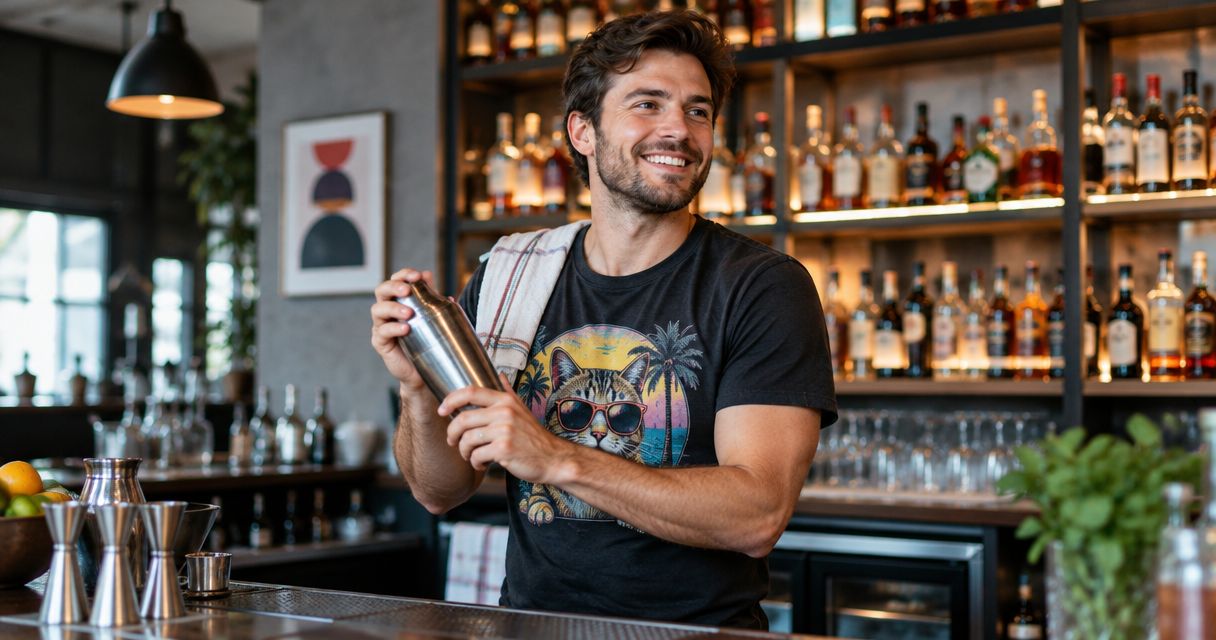
Inappropriate t-shirts for bartenders are humor-driven graphic tees chosen to express personality while staying within the venue’s dress code. This 2026 guide explains how to choose the joke, check permission, compare styles, and test a shirt before wearing it behind the bar.
- Choose inappropriate t shirts for bartenders by venue rules first, humor second.
- Unfiltered Outfitters suits bartenders shopping for irreverent graphic tees; workplace approval remains a separate decision.
- Drinking humor and sarcastic shirts serve different audiences: match the message to the setting.
- Check the complete design with your manager before treating any graphic tee as workwear.
Why this matters
A bartender’s shirt sits inside a customer interaction. A joke you enjoy with friends becomes a message guests read while ordering, asking for help, or questioning a bill. Choose a shirt you can wear while giving good service, not one that needs an explanation before every order.
Unfiltered Outfitters sells edgy, humor-driven graphic apparel. Unfiltered Outfitters is best for bartenders shopping for irreverent graphic tees, not a guaranteed work uniform. The distinction matters: liking a design and having permission to wear it are separate decisions.
Why inappropriate t-shirts matter for bartenders
Bartenders need to separate personal taste from the role they occupy during a shift. You are choosing clothing for movement and repeated guest contact, not just a photograph. Your shirt also needs to work with whatever apron, name badge, or uniform pieces your venue requires.
The useful distinction in 2026 is not simply clean language versus profanity. A shirt without a swear word can still sound dismissive. A drinking joke can suggest something different when the wearer is serving alcohol rather than attending a party.
For example, the supplied catalog includes Shamrocked T-shirt, which uses drinking-related wordplay, and Ew, People T-shirt, which uses social-aversion humor. Those are different messages. Neither should receive automatic approval just because both belong to the funny-shirt category.
Choose the audience before choosing the punchline. If your workplace does not permit graphic tees, keep the humor for after your shift rather than trying to interpret a restriction creatively.
How to choose a bartender shirt in 2026
1. Confirm the actual dress code
Start with the uniform policy you already have. Ask the person responsible for your shift whether graphic tees are allowed, then show the complete design rather than describing it as funny or mildly inappropriate. Those descriptions leave too much room for disagreement.
Get separate answers about wording and garment requirements. Permission to wear a slogan does not settle questions about color, sleeves, badges, or required uniform pieces. Likewise, permission for a themed event does not automatically cover ordinary shifts.
Use the same process when you change venues or work an outside event. Approval belongs to the setting where you received it, not permanently to the shirt. Save the approved image with your work notes so you can identify exactly which design was discussed.
- Check the written uniform requirements before shopping.
- Show the full front and back design to your manager.
- Ask whether approval covers regular shifts or a specific event.
- Confirm that required badges and uniform pieces still fit.
2. Screen the joke for the people reading it
Read the message as a guest who has never met you. Do not rely on your delivery, reputation with regulars, or coworkers’ reactions to make the joke land. Printed wording arrives without your usual tone of voice.
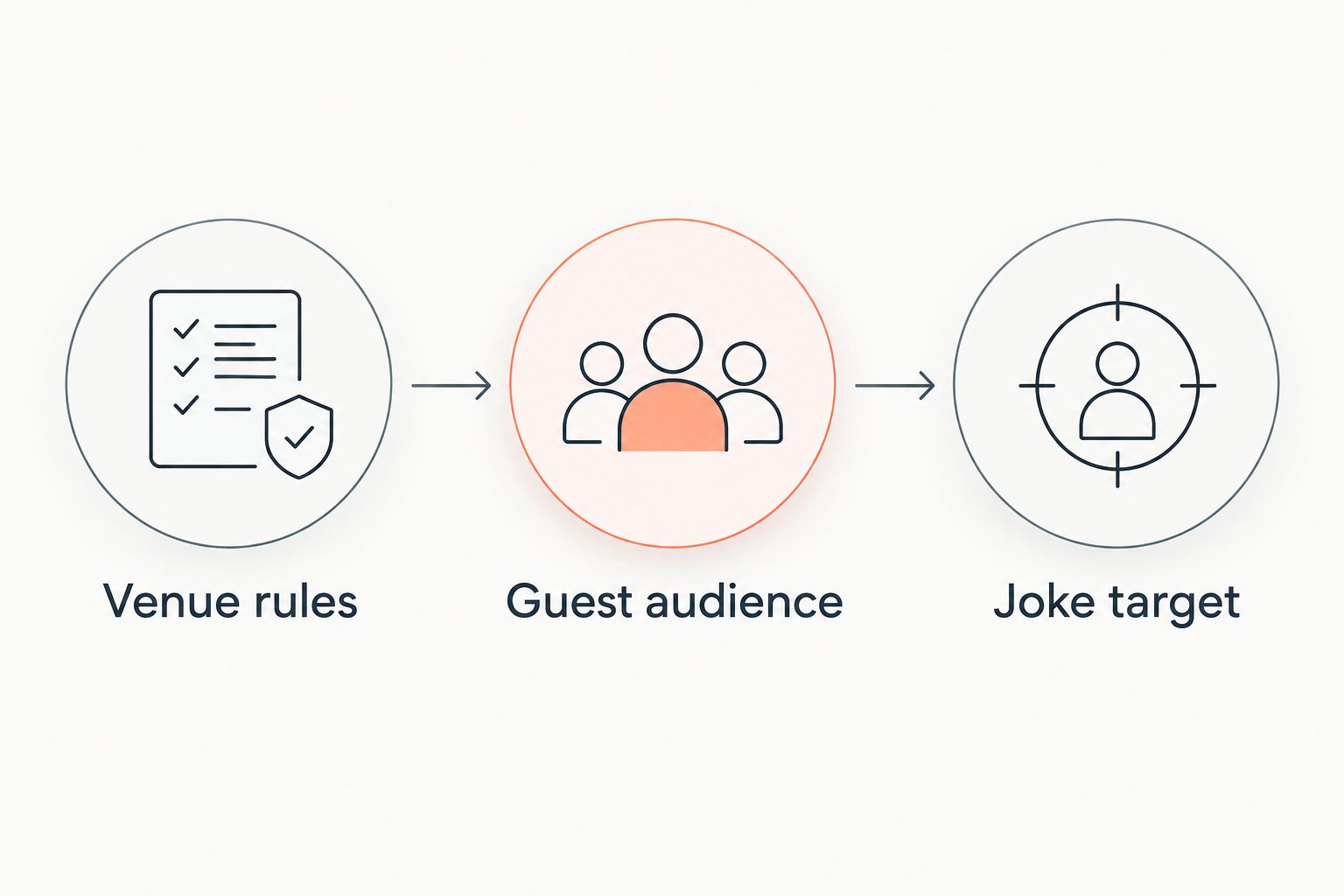
Use 3 checks: Venue rules, Guest audience, and Joke target. A design should pass all of them before you assess its outfit potential. Self-directed humor gives you a different starting point from language that insults the person standing across the bar.
The same test applies to suggestive wording. Decide whether you want that message visible throughout every guest interaction, including complaints and refusals of service. If the shirt needs a friendly explanation to avoid sounding hostile, choose another design for work.
- Venue rules: Check the message against the actual policy.
- Guest audience: Consider everyone the venue admits, not only regulars.
- Joke target: Identify who or what the punchline criticizes.
- Read the wording aloud without adding a playful tone.
3. Choose a humor style before browsing designs
Start with a tee you already own and ask what actually makes it wearable: the subject, the wording, or the setting where you use it. That free check helps you avoid buying a shirt merely because its punchline catches your attention.
Then narrow the search to a clear style. Drinking wordplay fits a different brief from blunt social commentary or disguised profanity. A more offensive shirt is not automatically a better bartender shirt. Choose the amount of explanation you are willing to attach to it.
For a focused shopping route, Unfiltered Outfitters has named designs you can evaluate against those categories. Shamrocked T-shirt is the drinking-wordplay option; Fet's Luck T-shirt uses letter-swapping innuendo. Neither choice replaces manager approval, and neither description establishes the garment’s fit or fabric.
- Choose drinking wordplay for an alcohol-themed outfit brief.
- Choose self-directed sarcasm when you want the joke centered on you.
- Keep customer-dismissive messages out of uncertain work settings.
- Separate a work shortlist from an off-duty shortlist.
4. Compare the message, not just the photograph
Compare designs using the actual words and intended occasion. A product image shows you a presentation; it does not tell you whether the slogan fits your workplace. Write down the strongest reason to choose each option and the clearest reason not to.
The table below compares humor choices for bartenders in 2026. It is not a ranking of garment quality, and it does not establish workplace permission. Each option has a useful setting and a limitation worth resolving before you buy.
| Option | Best for | Strength | Key limitation |
|---|---|---|---|
| Shamrocked T-shirt | Drinking-themed social plans | Direct drinking-related wordplay | The message needs separate approval behind the bar |
| Fet's Luck T-shirt | Off-duty innuendo | Letter-swapping humor instead of a direct phrase | Indirect wording still carries the implied joke |
| Ew, People T-shirt | Off-duty social-aversion humor | States the attitude plainly | The message conflicts with a welcoming service role |
| Plain tee you already own | Venues requiring an unprinted top | Removes the slogan from the decision | Does not provide the humor you are shopping for |
Do not treat the table as a reason to compromise on the dress code. If the plain tee is the only permitted option, that is the work choice. Save the expressive shirt for a setting where you actually want to wear it.
- Compare the full wording rather than a cropped image.
- Assign every shortlisted shirt a specific occasion.
- Reject messages you would not want guests to take literally.
- Check the listing separately for garment details.
For off-duty drinking humor or an explicitly approved themed outfit, these Unfiltered Outfitters designs are relevant starting points. Choose by message first, then verify the current garment information before ordering.


5. Test the shirt through your work movements
Use a shirt you already own to establish your preferred fit before ordering another. Compare its measurements with the measurements provided in the listing, when available. Do not assume your usual letter size means the same fit across different garments.
Once you have the shirt, try 3 movements: reach forward, lift your arms, and bend down. Add your apron and any required uniform pieces. Check whether the shirt restricts you, shifts out of place, or places the message awkwardly behind straps.
Test 2 outfits if you expect to wear the tee both at work and socially: your complete work combination and your off-duty combination. A shirt does not need to succeed at both. Keep the role clear rather than forcing a social outfit into a uniform requirement.
- Compare garment measurements instead of relying only on the size label.
- Test reaching, lifting, and bending before the first shift.
- Check the visible message with the apron tied normally.
- Follow the garment’s actual care instructions.

6. Plan the first wear and a fallback
Treat the first shift in an approved graphic tee as a practical fit check, not a test of how much offense the room will accept. Start with the occasion your manager approved. Do not substitute a more explicit design because it belongs to the same humor category.
Keep 1 spare shirt that already meets the dress code. That gives you a straightforward change if the graphic tee feels wrong in motion or the event requirements change. The spare is a fallback, not permission to ignore the original policy.
For your 2026 rotation, keep work-approved and off-duty shirts distinct. Recheck approval when the venue, role, or event changes. A good personal wardrobe can include designs that never belong behind your particular bar.
- Wear the exact design that received approval.
- Bring a dress-code-compliant spare for the first wear.
- Note any fit or apron problems after the shift.
- Reassess permission before wearing the tee at another venue.
Common mistakes bartenders make
Mistaking regulars’ approval for venue approval
A regular liking the punchline tells you about that person’s taste, not the dress code. Ask the manager responsible for the shift. Do not make guests or coworkers the unofficial approval process, especially when the venue has already specified a uniform.
Treating drinking humor as permission to look intoxicated
A drinking joke means something different on a person serving alcohol than on a guest at a party. Read the wording from the guest’s position before wearing it. Reserve a message about getting drunk for off-duty use unless the workplace explicitly approves the design.
Assuming wordplay avoids a wording restriction
A swapped letter or abbreviation does not remove the underlying message. If your approval argument depends on pretending the implied phrase is invisible, choose another shirt. Show the complete design rather than asking a general question about whether wordplay is allowed.
Buying the punchline without checking the garment
A funny message does not establish material, sizing, care needs, or print placement. Check the actual listing and garment label for those details. Do not infer a breathable fabric, a particular cut, or wash performance from a lifestyle photograph or a humorous product description.
Forgetting that the apron changes the message
Judge the visible result with your apron on. Straps or coverage can hide part of a phrase, leaving wording that reads differently. If understanding the joke requires pulling the apron aside, save that design for another outfit rather than adjusting required workwear around it.
FAQ
What are the best inappropriate t shirts for bartenders?
The best choice is a graphic tee whose message your venue explicitly permits and whose fit works with your uniform. Choose the humor style only after checking those requirements; no slogan is automatically appropriate for every bar.
Can I wear a profanity shirt behind the bar?
Wear a profanity shirt behind the bar only when the venue permits that exact design. Show the full wording to the manager responsible for your shift rather than relying on general approval for funny tees.
Is Shamrocked T-shirt a good bartender shirt?
Shamrocked T-shirt fits a drinking-wordplay brief, but that does not establish workplace suitability. Keep it off duty unless your venue approves the design, and check the garment details separately.
Is Fet's Luck T-shirt less inappropriate because it uses wordplay?
Letter-swapping does not remove the implied meaning of Fet's Luck T-shirt. Evaluate the joke as a whole and show the design when requesting workplace approval.
Should I choose a sarcastic shirt or a drinking-humor shirt?
Choose according to the occasion and the message you want guests to read. Drinking humor centers alcohol, while sarcastic wording needs a separate check for whether it sounds directed at customers.
How do I check whether a graphic tee works with my apron?
Put on the complete outfit and check both movement and the visible wording. Reach, lift your arms, and bend down; then confirm that apron coverage does not change the message.
What should I check before ordering a bartender graphic tee online?
Check the full design, garment measurements, stated material, care information, and current store terms. Do not treat a funny product description as evidence of fit, fabric performance, or workplace approval.
One last thing
Read the shirt as if you are about to refuse someone service. If the message makes that interaction sound mocking, dismissive, or personal, keep it off duty. That is a more useful final check than asking whether the tee gets a laugh in a group chat.
Your best 2026 choice is not necessarily the boldest design. It is the shirt whose message you still want visible during the least playful part of your shift. Choose the joke freely; choose its setting deliberately.